

Now more than ever teachers are being called upon to support social-emotional learning in addition to meeting educational goals. In the face of the Covid-19 pandemic, educators are navigating new technology, new ways of teaching, and unimaginable student stressors all while trying to ‘keep it together’ for themselves and for their families. Teachers are Heroes. They’re showing up to provide comfort and familiarity during uncertain times. They are modeling public learning and adapting quickly to a rapidly evolving educational landscape.

One growing commitment of education has been to provide support for the whole student – that is their academic, physical and emotional well-being. Brick and mortar schools and classrooms are often a respite for children and a controlled learning environment for teachers to set the stage for their students.

Now, teachers are tasked with observing and responding to students’ needs while they are at home, while there are more distractions, and with the pressures presented by changing schedules and limited control of inequity to resources and support for all learners. What we’re witnessing is a rebirth of the classical commitment – where teachers nurture students and are focused on creating a positive learning environment, using any and all tools available. Teachers who are dedicated to the future and invested in the well-being of students first, and academic achievement second.

Teachers are providing levity and emotional support to students. They are monitoring behaviors and educational outcomes for parents and administrators. And, they are developing and adapting to digital learning tools and accepting the risks inherent in learning, trying new things and making mistakes publicly. Teachers today are making themselves available and gracefully shouldering the responsibility of being present for our young people. They deserve our patience, empathy and a round of applause for their efforts and their courage during this time. Student success and the future of our communities depends on our ability to recognize and support our local heroes, and teachers should know that they are valued and that their fearlessness is appreciated by all of us.
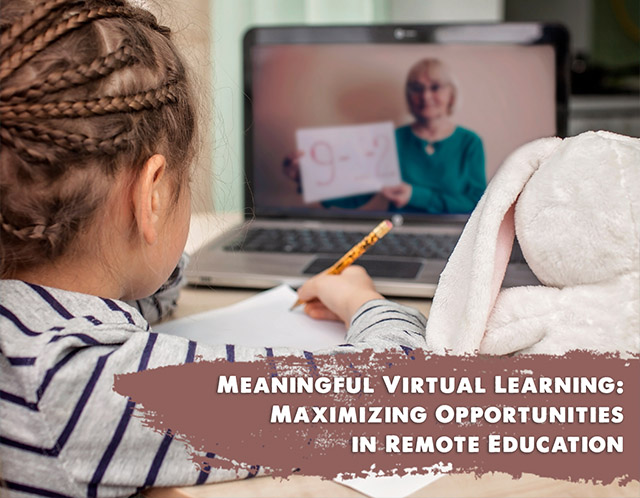
School schedules, learning spaces, student groupings and personnel configurations have all been affected by Covid-19. These educational structures have been disrupted and have to be re-imagined. What ‘Bold Moves’ can we take to ensure that digital learning environments are as effective as traditional ones? The gap between onsite and online learning may not be as wide as we think and used together might be the perfect hybrid learning environment. The approach to learning in a virtual classroom offers opportunities and advantages for students of all types.

In a classroom, teachers are making students feel safe and comfortable, observing body language, assessing readiness for learning and communicating expectations – all of which are possible through video conferencing. After overcoming the learning curve of new technology, the shift for teachers is in pedagogy – how educators use their time online with students makes the biggest difference. Teachers have to understand that some activities are best suited for a traditional classroom and shouldn’t be attempted in a virtual learning space. However, remote education offers opportunities for individualized, personalized and experiential learning that engages students and is efficient and effective for academic performance.
Distance learning activities can be easily differentiated and offer students increased independent practice time. Learning can be pragmatic and applied to hands-on activities in the home – measurements for a recipe or the square footage of a room; slow looking scientific observations of plant parts in a yard; or current events – exponential growth curves and graph plotting.

Individualized instruction meets the needs of students with a range of abilities and mastery of a skill set. Students have an opportunity to self-regulate, self-evaluate and self-motivate with proper guidance from teachers in a digital space to a greater degree than otherwise possible in a traditional classroom with all students in a room at the same time. Through this lens we are able to see some of the pedagogical advantages of distance learning and make bold moves now that can last into life after the pandemic.

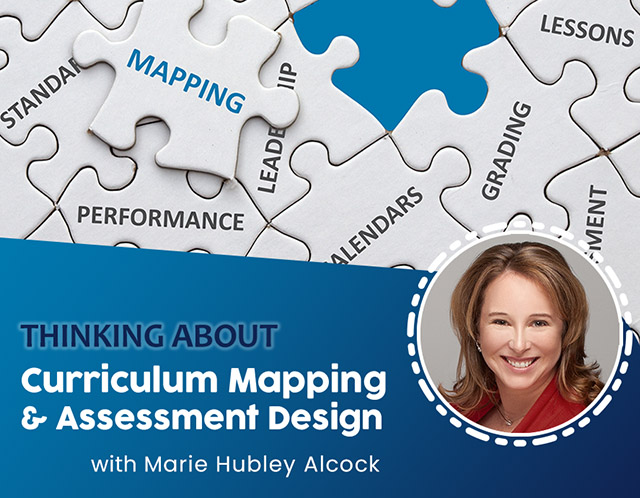
Curriculum Mapping can be described as the relationship between two sides of a coin. The first side is the creation of a database which includes the essential elements of a curriculum map. The other side of the coin is the review process – examining, discussing and revising maps within and across disciplines and grade levels. Dr. Marie Hubley Alcock provides an overview of curriculum mapping, connections to standards and essential questions, unit planning, assessment design and more in Curriculum Mapping 101 Online. This 10-module video course walks teachers through the curriculum mapping process from definition to critical assessments. The self-paced program includes downloadable templates and resources and is available to all TEN List Digital Library subscribers.

Is your school ready to do more than just talk about Curriculum Upgrades and action plans? Are you looking for an approach to curriculum that reflects the modern classroom? Would 2 days of personalized professional development and one-on-one consulting prepare your team for success?

Our popular Curriculum Mapping Boot Camp attendees all said YES to improving curriculum, documentation and assessment.

Contact Us to discuss hosting a Boot Camp at your school campus or with your district.